Mattress 101 · Materials & construction
Inside Obasan’s Approach to Organic Mattress Construction
An organic mattress is more than a list of natural ingredients. Its comfort comes from how each material is layered, how the layers respond to weight, and how the whole design is made to work night after night. Obasan’s Deluxe Dunlop Latex Mattress offers a useful case study in that construction: a customizable latex core, a softer surface layer, and a quilted cover finished with wool.
Published November 15, 2026
Mattress shopping can quickly become a vocabulary lesson. Dunlop latex, zoning, organic wool, quilting, support core: the terms may sound technical, but they describe choices that shape the feel of the bed in direct, practical ways. Understanding the sequence of materials is often more useful than judging a mattress by a single label such as “natural” or “firm.”
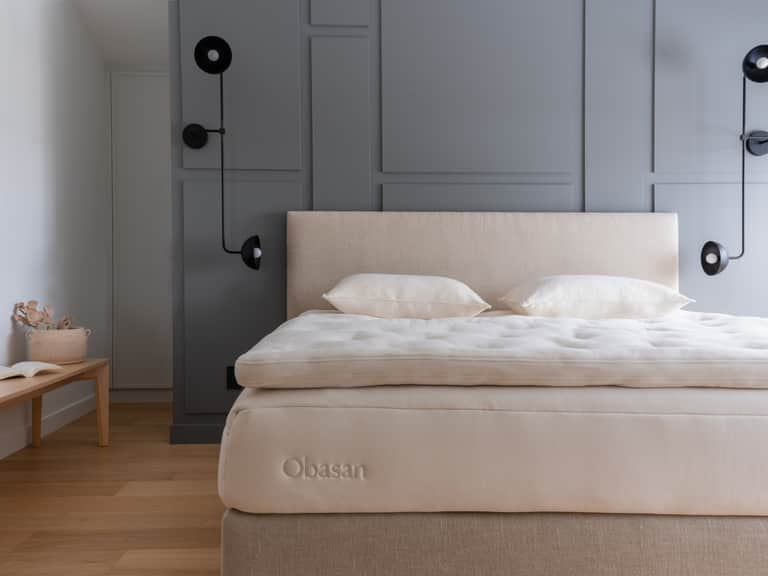
Obasan’s approach is built around distinct layers that can be considered individually and as a system. In the Deluxe model, the listed construction includes a four-inch medium or firm base, a customizable three-zone latex core, and a two-inch soft top layer. These components sit inside an organic cotton jersey cover quilted with wool. The mattress also includes a separate 2.5-inch Dunlop latex and wool topper, bringing additional cushioning and another opportunity to shape the surface feel.
That arrangement is worth examining not as a promise of one ideal sleep experience, but as a series of design decisions. The support layer establishes a foundation; the zoned center introduces variation; the softer top helps moderate pressure at the surface; and the cover and topper influence the immediate sensation of lying down. Together, they make a construction that can be adjusted rather than treated as a single, fixed block.
Start with the architecture, not the adjective
“Organic” describes an important aspect of a mattress’s materials and certification, but it does not tell you exactly how the bed will feel. Two mattresses can both use organic latex and still differ in firmness, height, layering, cover design, and the way they distribute support. Construction details connect the material story to the experience of sleeping on the mattress.
In the Obasan Deluxe, the layers are described as individually wrapped. According to the product information, this design is intended to reduce friction between layers and limit movement transfer. It also makes the mattress a component-based system: individual pieces have distinct roles, and some can be selected or arranged to suit a sleeper’s preferences. For shoppers comparing organic mattresses, that kind of detail is more informative than a broad claim about comfort alone.
It helps to ask three simple questions. What is the main support structure? What creates the softer surface feel? And which elements can be changed after purchase or tailored to a particular sleeper? These questions bring the conversation back to useful, verifiable features rather than impressions that may vary from person to person.
Dunlop latex: a resilient foundation
Dunlop latex is a resilient material made from latex and shaped into a supportive foam. In a mattress, its response is different from that of a loose fiber fill: it compresses under load and pushes back, creating a buoyant sensation that some sleepers describe as springy. Its precise feel depends on the formulation, density, thickness, and the other layers surrounding it. “Latex” by itself is not a complete firmness specification.
The Deluxe mattress uses 100% GOLS-certified organic Dunlop latex, according to its product details. GOLS certification concerns the organic status of latex materials and related production requirements; shoppers should still review the current documentation and scope of any certification when making a purchase. Certification can help clarify sourcing standards, but it does not determine whether a mattress is comfortable for a particular body or sleep position.
The four-inch bottom layer is offered in medium or firm. This choice gives the construction a distinct starting point: a medium base may feel less resistant than a firm one, though the finished mattress’s feel also depends on the center and top layers, sleeper weight, and foundation. A firmer base is not automatically better for every person, just as a softer option is not inherently more pressure-relieving. The aim is a balanced surface that feels comfortable while providing the support a sleeper prefers.
When assessing latex, ask for clear descriptions of each layer rather than relying on a single overall firmness label. Find out whether the material is Dunlop or Talalay, how thick each section is, whether the layers are replaceable or rearrangeable, and what the company means by a rating such as medium. If there is an opportunity to test the mattress, allow enough time to notice pressure at the shoulders and hips, ease of changing position, and whether the surface feels stable across the body.
Three-zone construction and personal fit
The Deluxe’s central four-inch layers run from head to toe and are divided into three sections, described as customizable. Zoning is a way of varying support across different areas of a mattress rather than treating the entire surface identically. In principle, this can help accommodate differences in body shape and where a sleeper places weight. The usefulness of zoning, however, depends on how the zones are arranged and whether their transitions align with the sleeper’s body.
People do not all have the same proportions, and they do not all use a mattress in the same way. A zone that feels supportive to one person may feel conspicuous to another. Bed size and sleep position can also affect whether a sleeper consistently rests over the intended areas. This is why “zoned” should be understood as a construction feature to investigate—not a guarantee of improved alignment or pain relief.
Obasan describes the mattress as customizable by zone and by side for queen and king sizes. For couples, separate configurations may make it possible to accommodate different preferences without choosing two entirely separate mattresses. Before ordering, clarify which components can differ from side to side, whether the mattress will have a noticeable center seam or change in feel, and how the configurations are specified. Ask how to identify and position each component during setup, too.
Customization is most useful when it responds to a clear preference. A shopper might already know that one side of a bed should feel more supportive, for example, or that a single uniform surface has not worked well. If the difference is uncertain, a detailed discussion of adjustment options and trial arrangements can help avoid paying for complexity that does not serve an everyday need.
The softer top layer and the question of pressure
Above the support structure, Obasan specifies a two-inch soft latex layer intended to reduce surface pressure points. In broad terms, a softer comfort layer can allow areas such as the shoulders and hips to settle more readily into the mattress. How much it changes the sensation depends on the sleeper and on the layers beneath it. A soft top cannot be evaluated in isolation from the firmer or more supportive components below.
The distinction between cushioning and support matters. A surface may feel plush at first touch yet still feel uncomfortable after a full night, while a responsive mattress may seem firmer in a showroom and feel balanced in regular use. A person’s weight, body shape, preferred position, and personal sensitivity all influence how a particular layer performs. No construction detail can predict every individual response.
The additional 2.5-inch topper is a separate latex-and-wool component included with the mattress. A topper can alter the initial feel of a bed and add a more forgiving layer above the main mattress. It also makes the overall profile different from the ten-inch mattress body alone. When comparing dimensions or fitted sheets, account for the topper’s height and check the product’s instructions about how its components are arranged.
A useful test is to pay attention to the whole body rather than simply asking whether a mattress feels soft or firm. Notice whether you can settle into a comfortable position without feeling pushed upward, whether pressure builds at prominent points, and whether the surface feels supportive when you change positions. The most comfortable option is not necessarily the one with the most cushioning; it is the one whose combination of give and resistance suits you.
Cotton and wool: the materials closest to the sleeper
The cover is part of the mattress construction, not merely a decorative finish. Obasan describes an organic cotton jersey cover quilted with 900 grams of GOTS-certified organic wool. Cotton jersey has a softer, more flexible character than a crisp woven fabric, while quilting gives the wool a place within the surface layer. The composition and stitching influence how the mattress feels before the sleeper reaches the latex below.
Wool is commonly used in bedding for its ability to manage moisture and help moderate warmth. Its performance depends on the amount used, the way it is quilted, the cover fabric, the surrounding layers, and the room itself. It should not be interpreted as a guarantee that every sleeper will stay cool in every climate. People who tend to sleep hot may still want to consider room temperature, bedding weight, pajamas, and airflow across the entire sleep environment.
Material claims are most useful when they are specific. Look for the name of the fiber, its role in the construction, and the relevant certification or documentation. “Natural” is a broad descriptor, while a clear breakdown can tell you whether a material forms the cover, the fill, the support core, or an optional accessory. Ask about adhesives, finishes, and other components if those details matter to your household.
For a shopper with sensitivities, a material list is a starting point rather than medical advice. A certified component does not establish that every person will tolerate the product, and sensitivities vary. Review the complete specifications, ask the retailer about the exact materials used, and consult an appropriate health professional if you have a significant allergy or health concern.
A construction made to be adjusted
One notable feature of this Obasan model is that its layers are presented as customizable components. The ability to select the base firmness and configure zones or sides offers a different approach from a mattress whose comfort depends on one unchangeable core. It may appeal to shoppers who value a more tailored arrangement or who share a bed with someone whose preference differs.
There is a practical side to modularity. Components must be installed in the right order and orientation, and a mattress may require periodic attention to maintain its intended feel. The product care guidance recommends flipping the inner cores every six months. Before buying, make sure the assembly process is clear, learn which pieces should be moved, and ask what assistance is available if the arrangement needs to be changed.
Modular construction also creates questions worth resolving in advance. Are replacement layers available? Can a configuration be changed after the original order? Does the warranty specify how the mattress must be placed or maintained? What happens if the feel is not right? Clear answers can be as important as the materials themselves, particularly for a substantial purchase with a long expected service life.
The foundation is part of the design
Even a carefully constructed mattress depends on an appropriate base. Obasan recommends a compatible foundation or a solid wood slat base with slats one to four inches wide and no more than three inches apart. It also specifies center support for double, queen, king, and California king sizes. These details matter because a mattress needs consistent support beneath it; an unsuitable base can affect stability and may conflict with care or warranty requirements.
Check the bed frame measurements before delivery, especially if the mattress will be paired with a platform bed or an adjustable base. Confirm that the frame’s slats meet the manufacturer’s spacing guidance and that the center support is present where required. The mattress should not be placed directly on the floor or on a solid platform, according to the supplied care instructions.
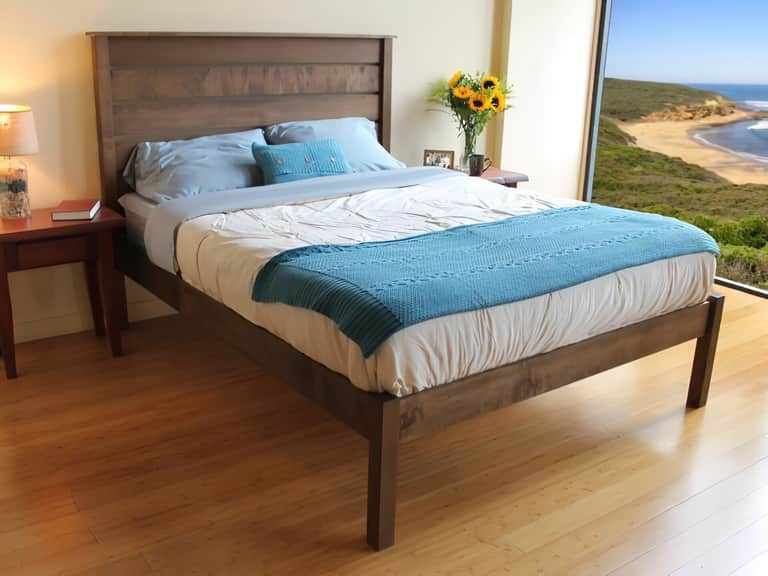
For shoppers considering a complete sleep setup, the Savvy Rest Esmont Platform Bed is one example of a solid-wood bed frame. Its product specifications list slats approximately three inches apart, though compatibility should always be checked against the exact mattress size and current manufacturer guidance before purchase. A bed frame’s appearance may set the tone of a room, but the support structure underneath should be assessed just as carefully.
Care, cleaning, and the long view
Natural materials still need practical care. Obasan advises using a mattress protector, keeping the mattress dry, and avoiding direct sunlight or direct heat. The outer cover can be unzipped for spot cleaning, but it is not machine washable. The care instructions recommend using light soap and very little water, then allowing the cover to air-dry. Following the product’s guidance helps avoid unnecessary moisture or heat exposure to materials that are not designed for conventional laundering.
A protector is a particularly useful first layer of defense against everyday spills, perspiration, and dust. Select one that fits the mattress depth, including the topper if it remains in place, and consider how its fabric and waterproofing may change the surface feel. Wash the protector according to its own care label rather than assuming mattress-care instructions apply to every bedding component.
The mattress carries a listed 20-year limited warranty, but a warranty term should not be confused with a promise that the bed will feel unchanged for that entire period. Read the written terms for exclusions, support requirements, maintenance expectations, and the process for a claim. Keep purchase documentation and record any setup instructions that may be relevant later.
Daily comfort can also be preserved by treating the mattress as part of a complete system. A stable base, suitable bedding, regular room ventilation, and prompt attention to spills can all help maintain a clean and comfortable sleep environment. Rotate or flip components only as directed, since different designs call for different care routines.
How to decide whether this style suits you
The Obasan Deluxe is a considered option for shoppers interested in organic materials, a layered latex construction, and a degree of customization. Its component design may be especially appealing when firmness preferences differ between partners or when a shopper wants to understand and adjust the mattress’s internal arrangement. The included topper adds another element to consider when judging surface feel and overall height.
It may be less straightforward for someone who wants a simple, one-piece mattress with minimal setup or a cover that can be fully machine washed. The product information specifies spot cleaning for the cover and advises keeping the mattress dry. Shoppers should also confirm delivery, assembly, foundation, and service arrangements, since these practical details affect the experience as much as the material list.
Before making a decision, use a checklist that moves from construction to lived experience:
- Confirm the exact material and certification details for the cover, wool, and latex layers.
- Ask how the medium or firm base and the three-zone center can be configured.
- Clarify whether queen and king versions can be customized separately on each side.
- Test the mattress in your preferred sleep position, if an in-person trial is available.
- Check total height with the included topper and verify fitted-sheet dimensions.
- Confirm foundation spacing, center support, assembly requirements, and care instructions.
- Read the trial, return, delivery, and limited-warranty terms before ordering.
This is a more reliable route than expecting a single phrase—“organic latex,” “pressure relieving,” or “customizable”—to settle the question. Construction descriptions tell you what is inside; a well-managed trial, where available, helps determine how it feels to you.
The larger lesson in organic mattress construction
Obasan’s layered approach illustrates how an organic mattress can combine material sourcing with deliberate engineering. Dunlop latex provides the core and comfort layers; a three-zone arrangement introduces the possibility of tailored support; a quilted cotton-and-wool cover shapes the surface; and a separate topper adds another dimension of cushioning. Each part has a role, but no single feature tells the complete story.
For consumers, the best mattress evaluation begins with curiosity and ends with practical questions. Look beyond the headline material. Compare the thickness and position of each layer, ask what can be customized, understand how the mattress must be supported, and take care instructions seriously. If certifications matter to your decision, verify what they cover rather than treating a badge as a substitute for a full materials description.
Ultimately, the right construction is the one that aligns with your comfort preferences, sleeping habits, room conditions, and expectations for care. A thoughtfully made mattress can make those choices easier to see. It cannot make them on your behalf—but it can give you a clearer, more informed way to choose.
Frequently asked questions
What makes the Obasan Deluxe mattress customizable?
Its product specifications describe a medium- or firm-option four-inch base and a customizable three-zone latex core. Queen and king sizes are listed as customizable by side as well as zone. Confirm the available configurations and ordering details with the retailer before purchase.
What materials are used in the mattress?
The listed construction uses GOLS-certified organic Dunlop latex, an organic cotton jersey cover, and GOTS-certified organic wool in the quilted cover. The mattress also includes a 2.5-inch Dunlop latex and wool topper. Refer to current product documentation for complete material and certification details.
Is the mattress cover machine washable?
No. The care guidance says the cover is not washable in a machine. It can be spot-cleaned with light soap and very little water, then air-dried. The product instructions also advise keeping the mattress dry and using a protector.
What kind of bed base does it need?
The manufacturer’s guidance calls for an Obasan foundation or an equivalent solid wood slat base, with slats one to four inches wide and no more than three inches apart. Double, queen, king, and California king sizes should have center support. Always check current instructions for the specific size and frame.